Planning a team trip sounds simple until you are the one doing it.
As a founder or executive, you already know the upside. In person time accelerates trust, alignment, and momentum in ways no remote ritual ever fully replaces. What usually stops teams is not belief. It is the process.
This checklist is designed for founders who want the impact of getting their team together without letting planning become a distraction or a drag.
If you do nothing else, use this as a gut check before things get busy.
1. Be Clear on the Why Before the Where
Before dates, locations, or budgets, answer one question: What do we want this time together to actually do?
Common goals look like:
- Aligning leadership around strategy
- Helping new hires build real relationships
- Resetting priorities after growth or change
- Rebuilding trust across functions
If you cannot articulate the purpose in one sentence, the trip will default to logistics and filler. That is when people leave saying it was fun but unclear.
Founder tip: If the purpose is alignment, protect time for real conversation. If it is bonding, do not over schedule.
2. Decide Who Owns What Up Front
Most planning pain comes from unclear ownership. You need to define three things early:
- Who is driving the process day to day
- Who provides input
- Who makes final decisions
Without this clarity, decisions reopen and timelines slip. With it, planning moves faster and expectations stay grounded.
Founder tip: Ownership does not mean doing everything. It means having authority to move things forward.
3. Lock the Budget Range Early
Budget uncertainty slows everything. You do not need a perfect number on day one, but you do need a range. Teams waste weeks debating options that will never get approved.
Set guardrails instead of precision:
- Target per person spend
- Hard limits that should not be crossed
- What the budget includes and excludes
Founder tip: A clear budget is a kindness. It saves time and prevents frustration later.
4. Get Availability Without Creating Chaos
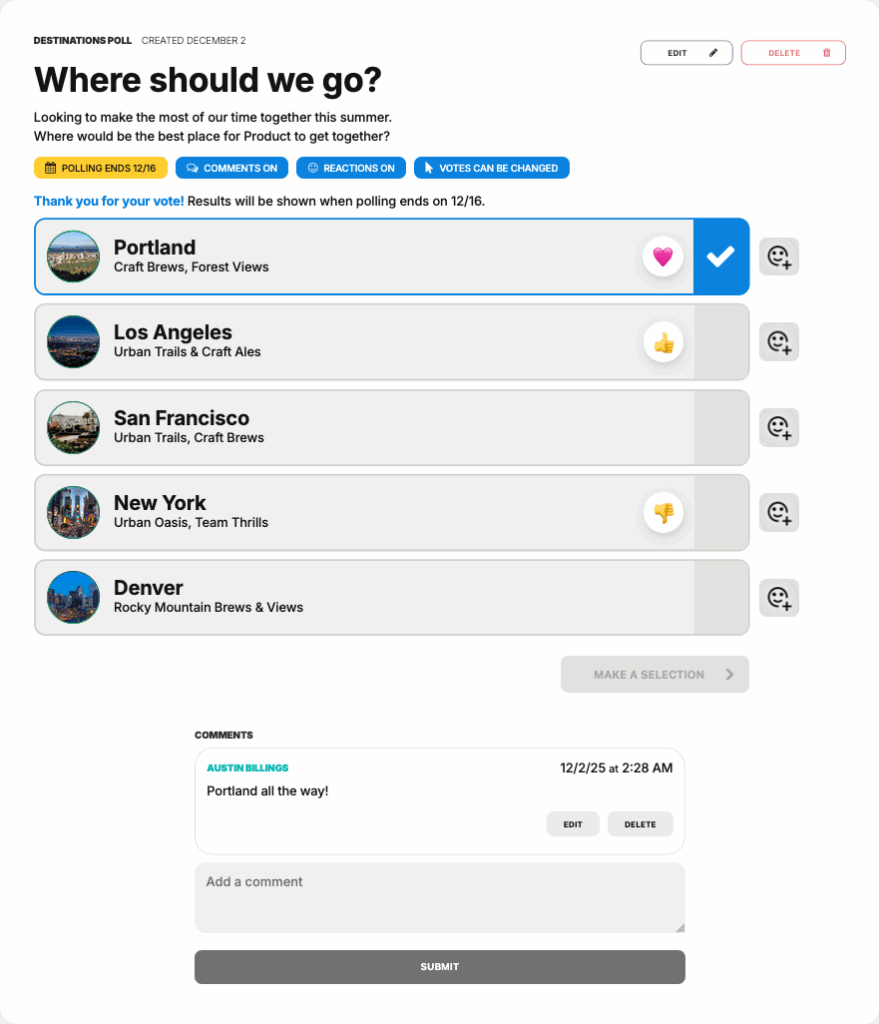
This is where planning often breaks. Availability gets gathered in Slack polls, spreadsheets, and side messages. Someone inevitably gets missed. Someone else responds late. Dates keep changing.
Whatever tool you use, the key is this:
- One place for availability
- A clear deadline
- A stated decision rule
Founder tip: Perfect dates do not exist. Aim for best possible, not unanimous.
5. Minimize the Number of Tools Involved
Fragmentation is the silent killer of momentum. When information lives in five places, decisions slow down and context gets lost. This is especially painful for executives who only see slices of the process.
Do your best to centralize:
Founder tip: Fewer tools means fewer follow ups and fewer mistakes.
6. Protect the Agenda From Overengineering
There is a temptation to fill every hour. Resist it.
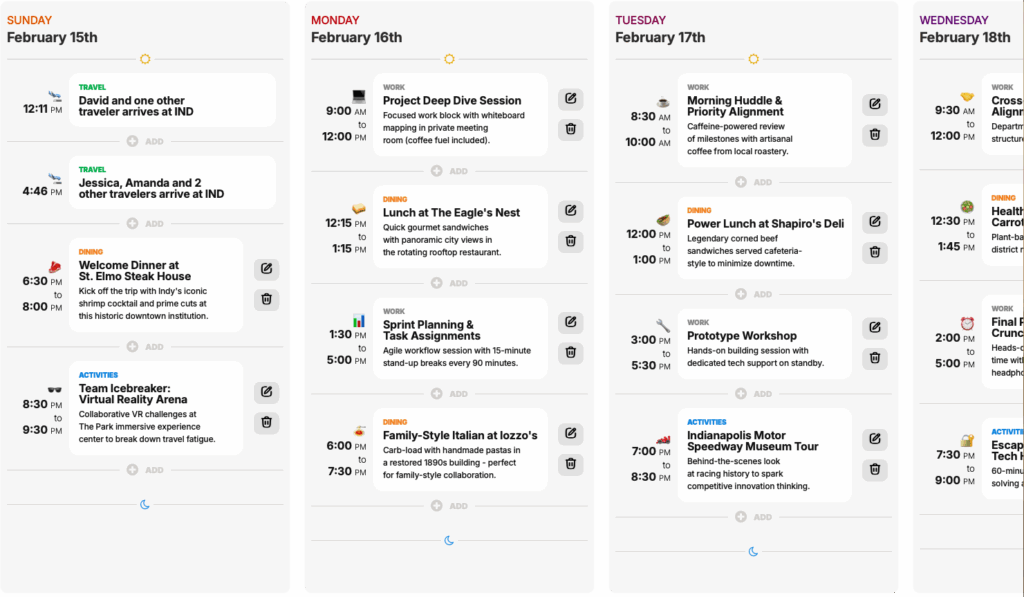
Some of the most valuable moments happen between sessions, over meals, or during unstructured time. Overplanned agendas feel productive but rarely create lasting alignment.
Founder tip: Leave space for conversation. It is often where the real work happens.
7. Communicate Early and Often
Silence creates anxiety. Even if details are not finalized, share what you know and what is still in progress. People want to feel considered and informed.
At a minimum, communicate:
- The purpose of the trip
- The expected timing window
- When decisions will be finalized
Founder tip: Transparency builds trust, even when plans are evolving.
8. Decide How Much Founder Time You Are Willing to Spend
This is the question most founders forget to ask. Every hour you spend coordinating logistics is an hour you are not spending on product, customers, or strategy. If planning starts to pull you too deep, something needs to change.
Founder tip: Stay involved in decisions, not coordination. That distinction matters.
9. Close the Loop After the Trip
The trip does not end when people fly home.
Alignment fades if it is not reinforced. Capture decisions, themes, and next steps while they are fresh.
Founder tip: A short follow up message summarizing outcomes goes a long way.
Final Thought
Getting your team together should feel like momentum, not maintenance.
The best team trips are not defined by location or budget. They are defined by clarity, ownership, and focus. When those are in place, planning becomes manageable and the impact lasts far beyond a few days together.
We built our company after living these challenges ourselves. This checklist exists because founders deserve a better way to approach something this important.
If this helped, you are already ahead of most teams.
We are here to help
If this resonated, you are not alone.
We built Vamos after living through the same planning challenges as founders and executives. Getting your team together should build momentum, not pull focus away from running the company.
For a limited time, we are offering free, white glove planning support for teams looking to plan their next offsite or team gathering. No commitment. No pressure. Just hands on help from people who have been there.
If you want support planning your next team trip, you can learn more here