
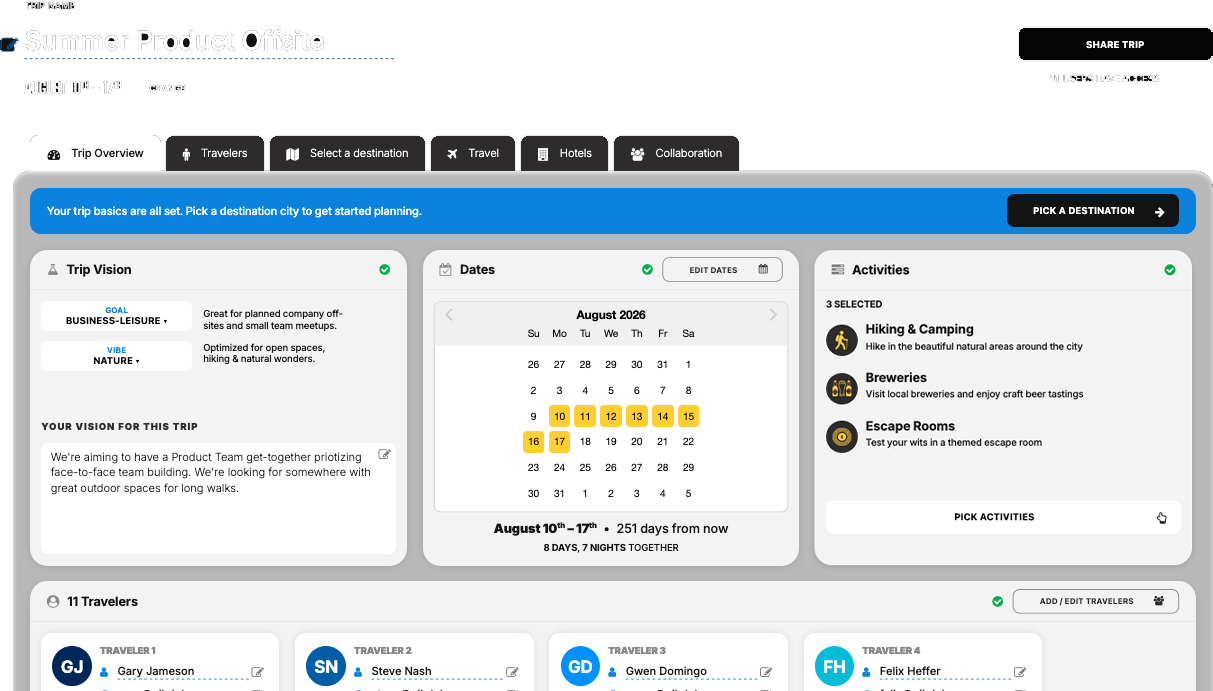
Most founders don’t struggle with deciding whether to bring their team together, they struggle with everything that follows.
Dates. Locations. Budgets. Opinions.
Suddenly, you are running a logistics committee instead of a company.
Recently, we watched a founder plan a 15-person team offsite in under an hour. Not because they rushed, because the planning stopped being the bottleneck.
Here is what actually happened.
Step 1: Start with alignment, not destinations
The founder did not open a doc or start listing cities.
They started by asking one simple question:
Where should we go, together?
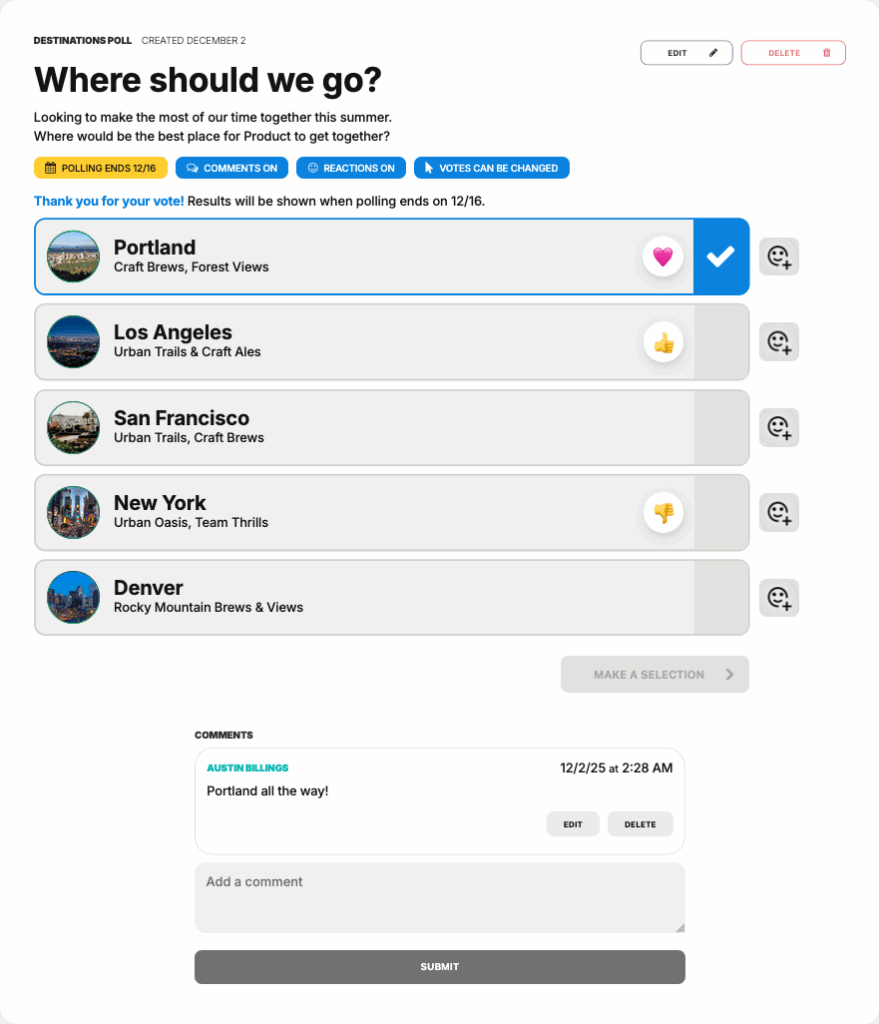
Instead of Slack threads or side conversations, the team voted directly inside the plan. Team members reacted, voted, and commented in one place.
Strong opinions surfaced early. Constraints showed up fast.
This is the part most teams skip.
And it is the reason planning usually drags on.
Step 2: Turn opinions into real options
Once preferences were in, the plan started to take shape automatically.
Instead of debating abstract ideas, the founder could compare real destinations side by side, with cost, travel, and experience clearly laid out.
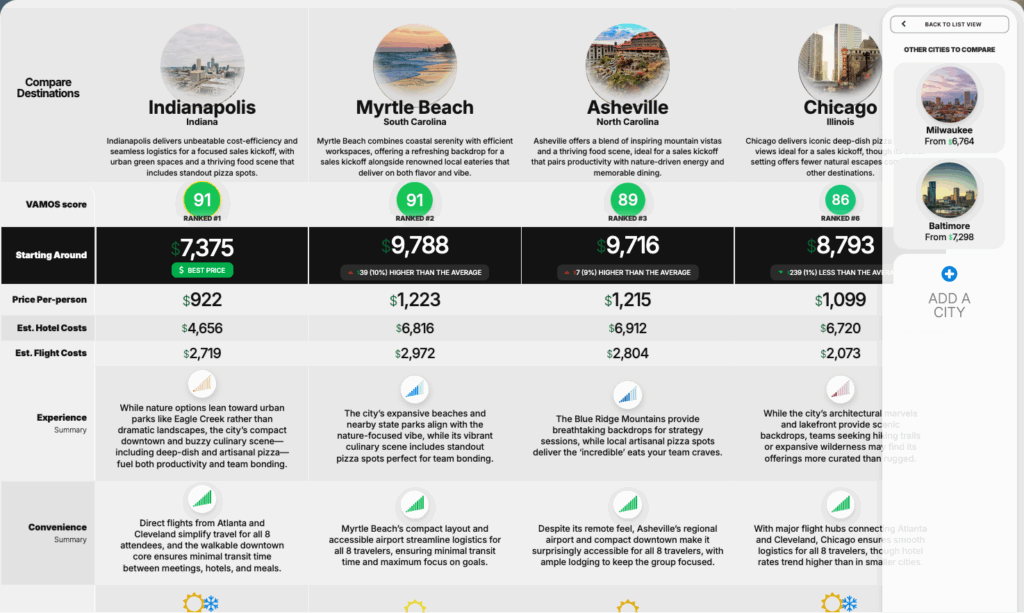
No spreadsheets.
No guessing.
No one asking, “But what about flights?”
The conversation shifted from debating to deciding.
Step 3: Build the itinerary without chaos
With the destination set, the founder mapped out the offsite week.
Work sessions. Team dinners. Arrival times. Space for breathing room.
All visible. All editable. All shared.
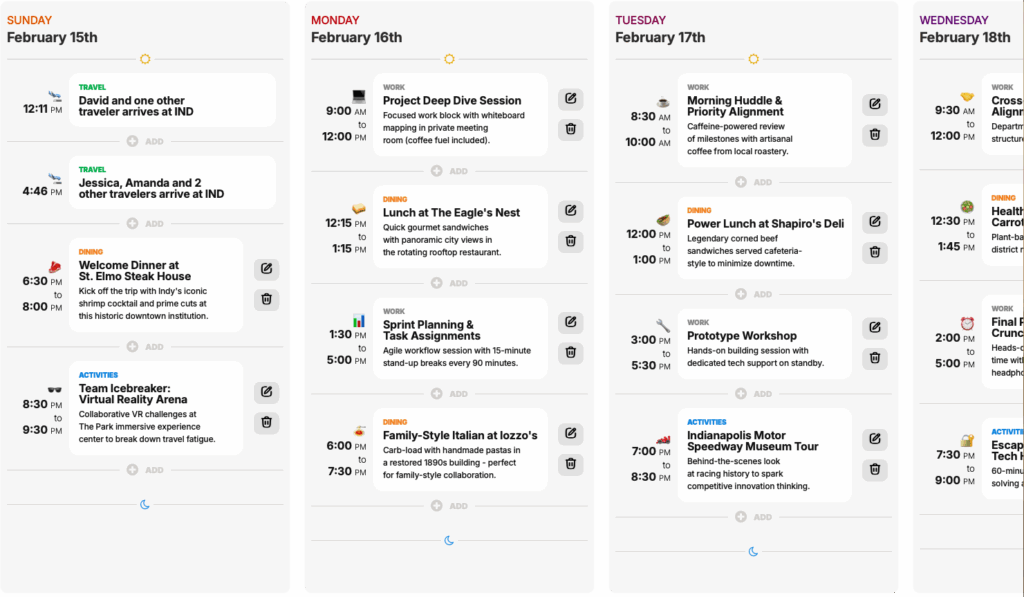
Instead of chasing feedback across tools, collaboration stayed attached to the plan itself.
No one had to ask where things stood.
Everyone could see it.
What actually got done in under an hour
By the end of the session:
- Dates were aligned
- A destination was selected
- Budget expectations were clear
- A working itinerary existed
No flights booked yet.
No restaurants over-optimized.
And that was the point.
Planning stopped being work that pulled the founder out of their role.
Why this works
We did not build Vamos to help founders pick cities.
We built it to remove the friction between “this would be great” and “this is happening.”
Most offsites fail quietly in the planning phase.
Not because teams do not care, but because coordination gets heavy.
This is what planning looks like when it does not.
Closing
If you have been delaying an offsite because planning feels heavier than the payoff, this is a better way to start.
Alignment first.
Clarity early.
Less time stuck in the weeds.
Leave a Reply